This was the third story for Dr. Dean’s Spring 2020 Digital Design and Editing class. The graphics were created by Miranda Day and the story was written by Raylen E. Stockdale. I was editor for this story.
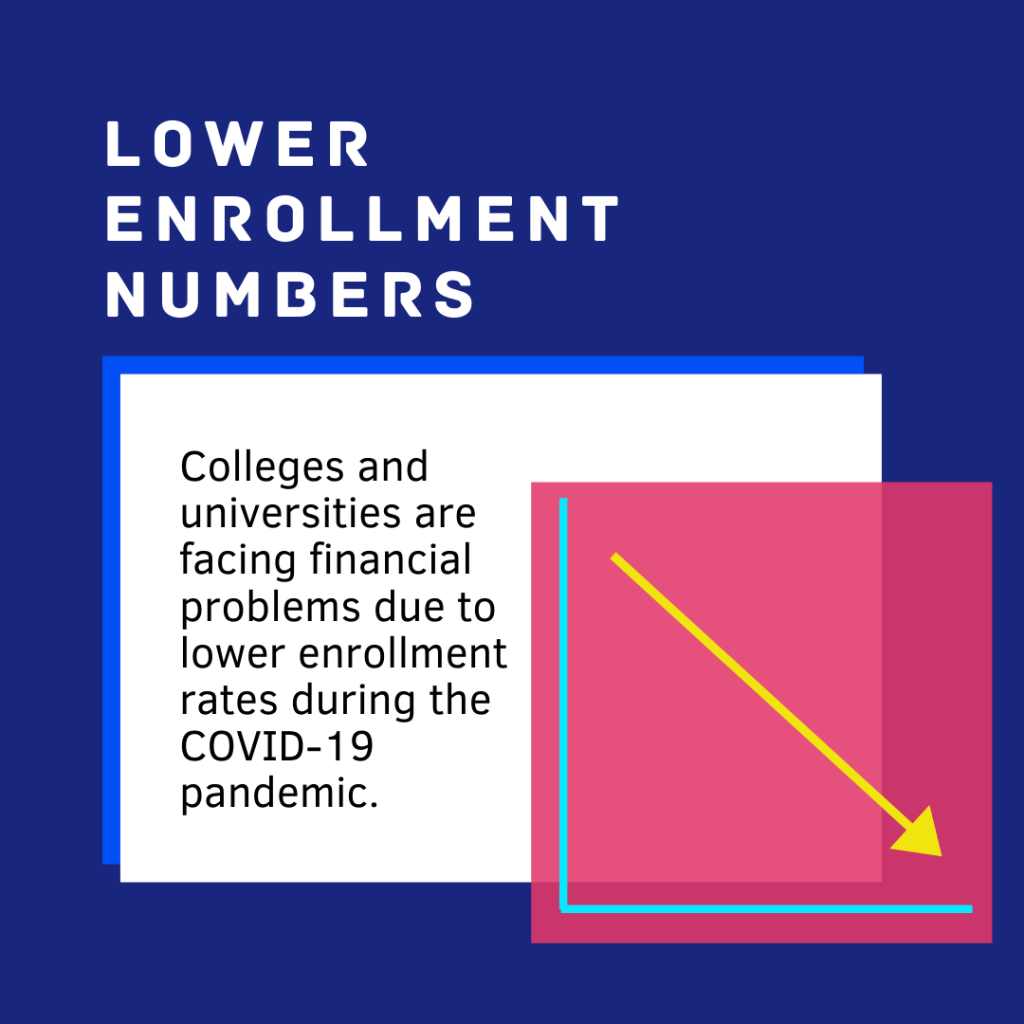
COVID-19’s impact on enrollment at American colleges and universities could be financially devastating in the coming months, according to CNBC.
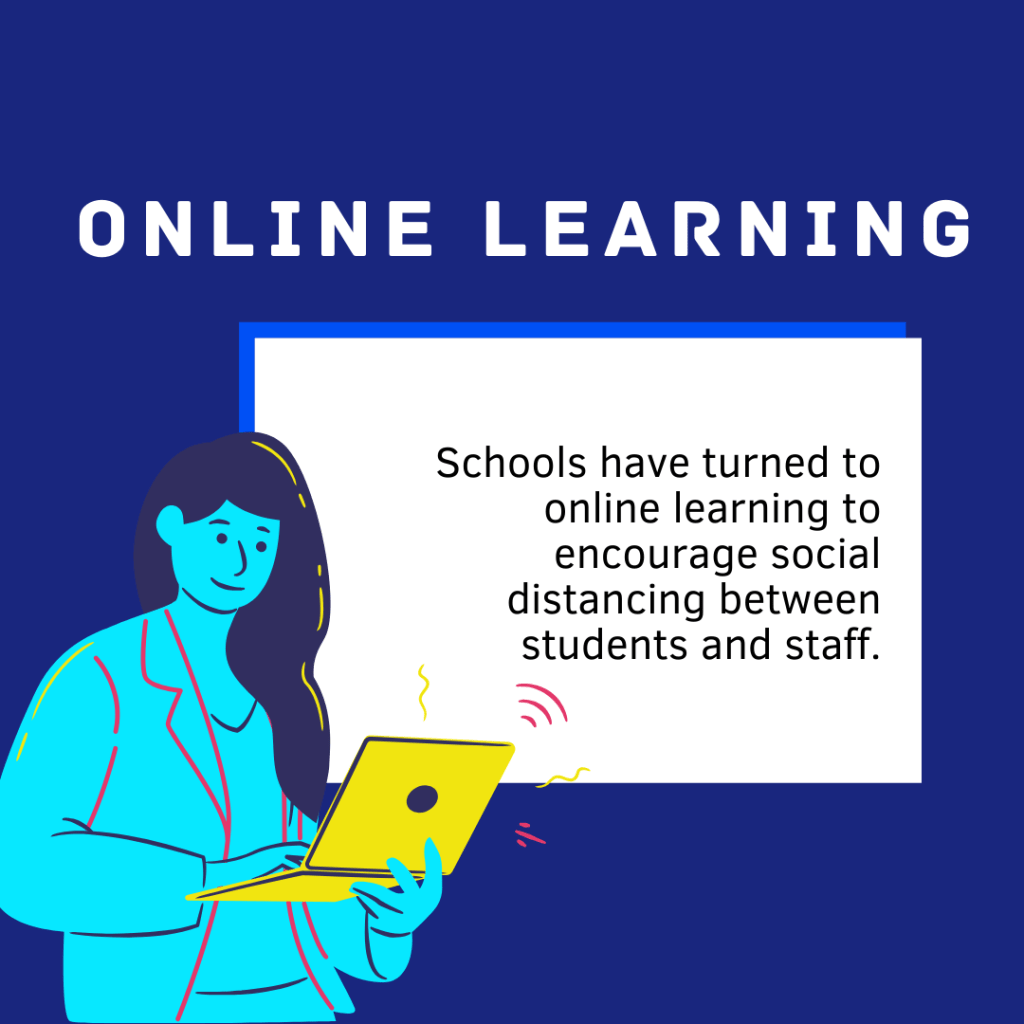
The pandemic has forced all classes to transfer over to online-only instruction, leaving students calling into question the quality of distance learning compared to traditional classes, according to the April 27 article.
“Many schools are tuition-dependent,” said Robert Franek, editor in chief of The Princeton Review and author of “The Best 385 Colleges.”
Franek says that many colleges are facing a lasting economic impact.
“It really does change their financial make up for next year and beyond,” he told CNBC.
While many major public and private colleges are facing financial problems due to lower enrollment numbers, community colleges could see a spike in registration, according to CNBC.
In the past, community colleges have seen larger numbers of incoming students during times of economic decline, according to the United State Census Bureau.
“Under the circumstances, families may turn to us as the gateway of opportunity, and we’ve been ready,” said Michael Baston, President of Rockland Community College in Rockland county, New York.
With higher education planning on how to handle enrollment and budget shortfalls, the impact of COVID-19 will be felt on public schools locally.
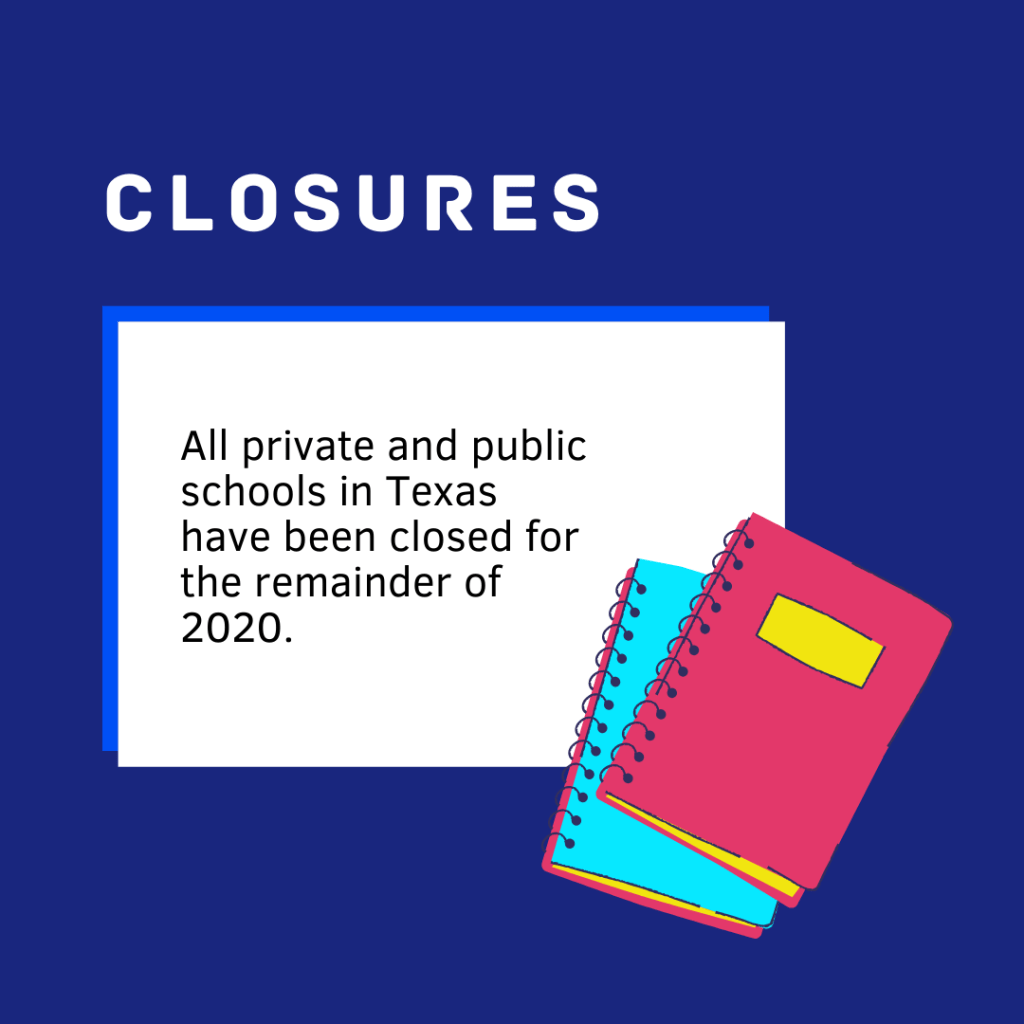
On April 17, Texas Governor Greg Abbott announced that all Texas schools, public and private, will be closed for the remainder of 2020, according to the Texas Tribune.
“The team of doctors advising us have determined it would be unsafe to allow students to gather at schools for the foreseeable future,” Gov. Abbott said in his press conference.
As COVID-19 had begun to spread in Texas, school administrators made calls to extend spring break which gave teachers the ability to re-tool classes into an online format, according to Texas Tribune.
Fort Bend Independent School District Superintendent Charles Dupre told the Texas Tribune that his district had decided to continue distance learning until the end of the year before Gov. Abbott issued his statewide order.
“It was in the best interests of our students and staff,” Dupre said.
During the 2014-2015 school year, Fort Bend Independent school district was the 7th largest school district in Texas with 72,152 students, according to ballotpedia.org.
“We believe it will be even more disruptive to our students, staff and teachers to ask them to pivot back into our buildings and the traditional classroom environment,” Dupree said in a district wide message.
Gov. Abbott’s decision to close Texas schools was met with praise by the Texas State Teacher’s Association, according to the Houston Chronicle.
Texas Education Commissioner Mike Morath said in a press release that, “We fully support the Governor’s decision to temporarily close schools statewide. As we continue to prioritize the health and safety of all communities across Texas, we are working around the clock to ensure that our school districts have the instructional guidance they need so that students can successfully pursue their studies at home. We know many questions remain over how best to do that.”
Much of the same approval has been extended in Michigan by parents to Gov. Gretchen Whitmer, who has been praised for her swift action in closing schools until the end of the year, according to Bridge Magazine, a Michigan non-profit news outlet.
A poll recently conducted by the magazine and Lansing based public policy consulting firm; Public Sector Consultants showed that 70 percent of parents surveyed supported Gov. Whitmer’s decision to close all schools.
Gov. Whitmer’s actions are a stark contrast to comments made by President Trump who reportedly told U.S. governors on a conference call that they, “better get on with it,” that “a lot of people are wanting to have the school openings.” According to CNN.
Virginia Superintendent of Public Instruction, James F. Lane is co-chairing a task force to assist member states of the Southern Regional Education Board to re-open schools and prepare for a possible second wave of COVID-19 cases.
The SREB is an organization based in Atlanta Georgia. The board works with member states to improve education conditions for students of all levels, according to the organization’s website.
The SREB consists of sixteen states along the southeastern U.S. with Oklahoma and Texas as the westernmost members and Maryland and Delaware as the northernmost members, according to the SREB website.
“I look forward to sharing what we have learned in Virginia about keeping students connected with learning during this crisis, and how we are planning to assess and meet their instructional and social and emotional needs once it is safe to resume formal instruction.” Lane told WSLS News, the Roanoke Virginia NBC affiliate.
SREB President Stephen L. Pruitt echoed Lane’s statements saying, “how schools reopen is much more important than how they closed,” and that “we must ensure each student has every opportunity to learn.”
In addition to providing guidance for school re-openings, the task force is looking at ways to address student academic growth and any possible learning loss, equity and opportunity for students during and after the crisis, use of federal stimulus funds effectively and managing state budget priorities, and access to broadband and the use of technology, according to WSLS News.
Pruitt stressed the need for adaptability in the current situation to WDRB News in an April 30 story.
“We just have to recognize the world’s just never going to be the same, and if we don’t change with that, then I don’t believe we can ever get there.”

https://ballotpedia.org/Largest_school_districts_in_the_United_States_by_enrollment#Texas
https://www.census.gov/newsroom/press-releases/2018/postsecondary.html
https://www.cnn.com/2020/04/28/politics/trump-governors-call/index.html

 Thomas T. Moore