“Come right in, sit wherever,” Student Veteran Organization President Jonathan Perkins says amicably.
Perkins is white, 5 feet 8 inches tall. He sports the typical long beard common to those who have left the military. His strength is apparent in his handshake, despite retiring from the active duty Army in 2014.
“I think that there is a big misconception on campus about our organization,” Perkins said. “You don’t have to be a veteran to join or be a part of meetings.”
While the organization’s officers are all veterans, Perkins contends that the club is open to all.
“We welcome anyone, reservists, family of veterans, it takes a lot to support those who take the oath to serve,” Perkins said.
Perkins began his career as a young Private in 1988. Originally enlisting as a 21N, the military occupational specialty code for a heavy equipment operator, Perkins first duty station was in Zirndorf, Germany during the last days of the Cold War.
“We saw tons of people piling into those tiny German cars after the [Berlin] wall fell,” Perkins said. “They were just trying to get out of East Germany.”
Perkins was then deployed to Saudi Arabia and Kuwait during the Gulf War and again from 2006-2007 for Operation Iraqi Freedom.
“My unit was 85 Kilometers (52 miles) from Baghdad [during the Gulf War] when we were ordered to turn around and come back [to Kuwait],” Perkins said. “We weren’t invading that first time.”
Perkins was a Staff Sergeant by the time Operation Iraqi Freedom had began and with the influx of new soldiers and the out-processing for others meant that there was a shortage in certain leadership positions, or billets as they are called in the military. This is where Perkins learned the value of leading others and stewarding the profession.
“I have always been one to leave something better than it was when I got to it,” Perkins said.
Senior Marketing Major Christine Davis is posted at the front door. Clad in a Navy sweatshirt, she warmly hands out programs along with handshakes and a welcoming smile.
“My brother is at A school right now,” Davis said. “He graduated [Navy] boot camp at Great Lakes in March this year.”
Davis’ brother Gavin is a nuclear technician. Nuclear power is one of the most academically demanding rates in the Navy. His training can last up to six months before he is assigned a spot in the fleet, according to navy.mil.
“I was always raised to respect people in the military, their service, and their families,” Davis said. “But I think being part of it now, and being the family that sends him off, its different, I feel much more connected to it than before.”
This is the third version of the Student Veterans Organization. Previous versions of the organization had more actual student veteran involvement but were not recognized by the school. Perkins claims that this is the most organized version he has seen yet.
“We actually have done the constitution for the organization to make it official with the university,” Perkins said. “We have done all the mandatory training regarding guidelines within the student handbook.”
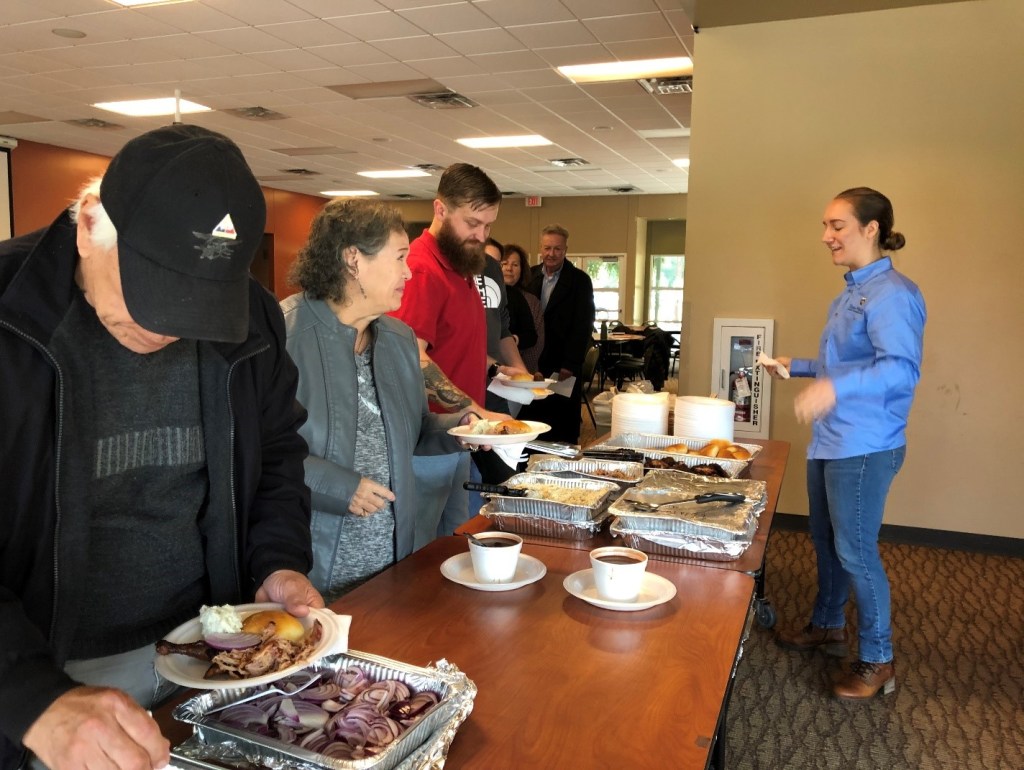
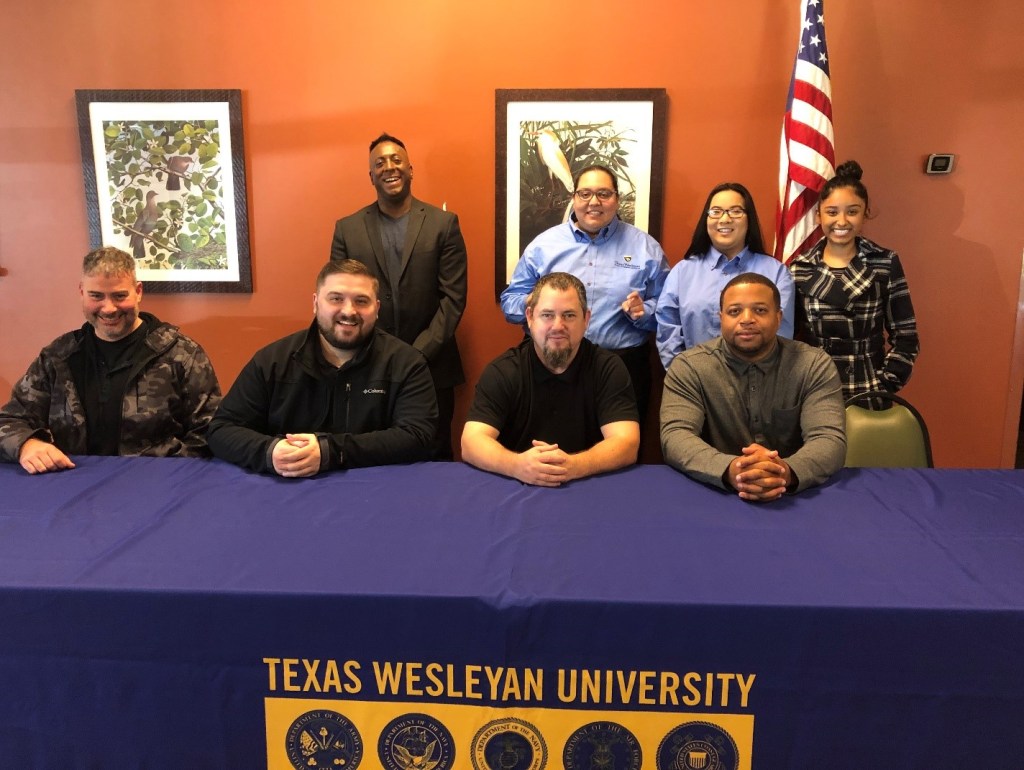
Along with accepting non-veteran members, the Wesleyan SVO has also started reaching out to veterans’ organizations at other campuses, coordinating tours of the Wesleyan campus for those who are looking to transfer from a junior college. At this luncheon, there were five student veterans from TCC’s Trinity River campus.
“We are always looking for ways to volunteer and serve the community,” Perkins said. “We want to end the trend of veteran unemployment and grow our outreach to show the campus and the community the opportunities that exist here at Wesleyan.”
Junior history major and SVO secretary, Kyle Parker was one of those success stories. Parker was a young Sergeant, completing his enlistment as an armor crewman stationed at Ft. Hood. Parker had moved to DFW and started taking classes at TCC’s Northwest campus.
“My advisor [at TCC] had graduated from Texas Wesleyan, she talked it up and said it was really close,” Parker said. “Obviously we aren’t normal students, most of us are married and own our own houses, we can’t travel far for school.”
Parker decided on Wesleyan and found he fit in with the smaller campus.
“I wanted to go somewhere that wasn’t going to eat through my GI Bill super quick,” Parker said.
Affordability is something that student veterans must think about before committing to a college as well. It is a common misconception that the post 9/11 GI Bill covers any college, but there are still limits. Mostly when it comes to private universities.“I could not attend TCU on the yellow ribbon program because I didn’t join the Army in Texas,” Parker said. “Wesleyan was the easiest choice because they worked with me, I’m happy with my experience here.”

 Thomas T. Moore